Sunday, 14 April 2024

LinkedIn


This will be the final entry of my MKTG 290 blogs! Today, I will be discussing the social media platform known as LinkedIn.

Before I continue, I must say that this has been an overall learning experience but truthfully, I'm extremely happy that these blogging assignments are over! It has been extremely overwhelming. Trying to balance work, a business, being a parent and school is very difficult. Nonetheless, the show must go on.

So, without further delay, let's get into it!

For my entry this week, I was tasked with finding an interesting LinkedIn profile and making a journal entry about my experience.

I always viewed LinkedIn as an employment platform. Somewhat of a space where you can upload your resume for employers to view. However, it's much more than that!


But what is LinkedIn?

History

LinkedIn is a business and employment-focused social media platform that works through websites and mobile apps. It was launched on May 5th, 2003, by Ried Hoffman and Eric Ly.

The platform is primarily used for professional networking and career development and allows jobseekers to post their CVs and employers to post jobs.

LinkedIn has more than 1 billion registered members from over 200 countries.


Your LinkedIn Profile

Crafting an effective LinkedIn profile is essential for professional networking, job opportunities and personal branding. There are important aspects to consider when creating or updating your profile, and these were formulated by LinkedIn experts:
  1.  Great Profile Photo 
  2. Branded Background Image
  3. Professional Headline
  4. Summary
  5. Experience
  6. Education
  7. Skills
  8. Recommendations
  9. Conclusion
A LinkedIn profile is your digital elevator pitch. It should stand out, tell your story and created opportunities for networking and career growth.


Main Features
  • Job and internship search.
  • Professional networking and relationship building.
  • Skill development and learning.
  • Content feed and LinkedIn Stories.
  • Individual member profiles and company pages.

My Experience

LinkedIn has so many profiles that I had to enlist the help of a friend to help me navigate and find a profile that interested me.

Eventually I found one of an Operations Manager/Executive Assistant from Canada. I chose her because a lot of the things she spoke of were relatable. She said:
I'm like the colleague at work that everyone wants to know but nobody wants to be. If you want something done, you come to me - everyone knows that! Yet no one wants to have to do what I do because of the amount of personal time and effort that goes into being everyone's go-to


Being a "secretary" myself, I know how demanding it can be meeting deadlines and going above and beyond to ensure that someone else's tasks are completed. She also said:

but I also understand the importance of standing your ground and holding your own - Balance

Her profile contained all the important aspects needed for it to stand out! It also had that personal touch where she mentioned that she's the mom of a toddler. Just the right amount of insight, nothing excessive.

All in all I believe that LinkedIn is the perfect platform for persons wanting to "display" their resume online.

The only negative to LinkedIn is that I find they use the word professional a lot which can seem a bit intimidating to someone who is not at that level yet.

Does it mean that this platform is more suited to persons who are professionals?


Monday, 8 April 2024

Twitter (X Platform)


From Presidents to politicians, athletes to actors, celebrities to human rights activists; people of all walks of life have posted tweet! Twitter's evolution - from its humble beginnings to being bought for a whopping US$44 billion by Elon Musk - has been a fascinating ride, which has helped shape the way we communicate online.

This platform has never appealed to me as the others, and I have never downloaded the app or made any attempt to understand it's features. I am certain that I'm not the only one, so let's delve into its domain! 😁

So,

What is Twitter?

Twitter is a social network and real-time communication service launched in 2006 and used by millions of people and organizations to quickly share and discover information.

The word Twitter comes from the frequent chirping sounds made by birds, hence the bird used in the Twitter logo.

Users can access the site via the web or mobile devices to exchange bite-size updates of information called 'tweets' which are messages of up to 140 characters that anyone can read or send.


History

Twttr was the original project code name for Twitter when it was first under development. It was created in March 2006 by Jack Doresy, Noah Glass, Biz Stone and Evan Williams. It was officially launched in July of the same year. 

It started off as a Podcasting company called Odeo before becoming the microblogging service it is today.

Dorsey had originally imagined Twitter as an SMS-based communication platform where groups of friends could keep tabs on what each other were doing based on their status updates. 

When Twitter was launched, no one used the word "tweet" as a noun or verb. Instead, the tweeting process was referred to as "Twittering." "Twitterrific" and "twits" were also used but it wasn't until June 2008 that the word "tweet" appeared on the company's blog without the quotation marks.


The Twitter Experience

With over 500 million users, Twitter is one of the world's largest social networks and the fifth-most visited website in the world. Users can share text, messages, images and videos as "tweets."

The key to navigating this platform is to master the lingo. The Twitterverse has its own vocabulary you'll be sure to see. Some of these words include:

  • Tweet - a standard message on Twitter containing 140 characters or less.
  • Retweet - a tweet that has been reshared to all of a users' followers.
  • Hashtag - the # symbol is used to tag keywords or topics in a tweet to make it easily identifiable for search purposes.
  • Mention - tweets can include replies and mentions of other users by preceding their usernames with the @ sign.
  • Handle - this designates your username and accompanying URL at http://twitter.com/handle.
  • Feed - the stream of tweets on your Twitter homepage comprised of all the accounts you follow.
  • Lists - Twitter provides a mechanism to list the users you follow into groups of curated lists showing tweets of all the users in the list.
  • Direct Message - also called a DM, this represents Twitter's direct messaging system for private communication amongst users.

How to get started on Twitter?

  1. Sign up - choose a username for your Twitter 'handle.'
  2. Follow sources - after you sign up for Twitter, you'll be given some suggestions of popular users to follow. This is the first step in using Twitter as a discovery engine to start following interesting new people and sources.
  3. Post a tweet - you can post tweets up to 140 characters. These tweets can also have media embedded like photos, videos or snippets from articles.
  4. Retweet
  5. Connecting and Mentions - Twitter provides a great way to connect with other users and monitor your interactions and mentions.
  6. Twitter Search and Discovery - see what's happening right now tailored just for you. Use the Discover tab to keep up with tweets, activity and other source for new people to follow.
  7. Twitter for Mobile - the mobile app allows you to have a consistent experience using Twitter on any smartphone or tablet.
  8. Tools and Apps - there are a ton of great apps and tools to enhance your Twitter experience and help manage potentially multiple profiles.


Challenges and Controversies

Twitter's journey has been marked by both progress and pitfalls, as it grapples with maintaining a balance between free expression and responsible moderation. It has faced many challenges and controversies over the years. Here are a few notable instances:

  • Legal Challenge Over Hate Tweets - in a landmark legal battle, Twitter failed to remover a series of hate-filled tweets reported by users.
  • Design and Hostility - Twitter's design has come under scrutiny for facilitating hostile communication online. Critics highlight the company's inadequate response to trolling, harassment and abuse.
  • Banning of Donald Trump's Twitter Account - in the aftermath of the Capitol riot in January 2021, Twitter permanently suspended then-President Donald Trump's account due to concerns about incitement of violence and the spread of misinformation.
  • Censorship of Twitter - Twitter has faced criticism for its inconsistent handling of content moderation, leading to debates about free speech, misinformation and the role of social media platforms.


Twitter for Business

Twitter is an excellent resource for businesses to grow their audiences, increase traffic and generate more leads. With over 400 million tweets a day and 200 million active users, people tune into Twitter to bring them closer to the things they care about. You should look to have at least a personal profile and a separate one for your business too! Having a great business profile gives your brand credibility on social media.

Some best practices to be awesome on Twitter include writing good tweets, sharing relevant and interesting content and sharing other people's stuff as well.

Twitter also offers promotions and advertising to get your business in front of even more fans.


Conclusion

Twitter is basically the best way to discover the best way to discover new content and keep up with your favourite topics of interest and people. Twitter lets you exchange ideas and information instantaneously bringing folks together from all across the globe like never before.


References

www.lifewire.com
www.businessinsider.com
www.wikipedia.com
www.socialmediatoday.com


Next week, I wrap up my MKTG 290 blog with my final post...

LinkedIn


Sunday, 31 March 2024

Photo and Video Based Social Media


This week, the discussion continues about the different types of social media platforms.

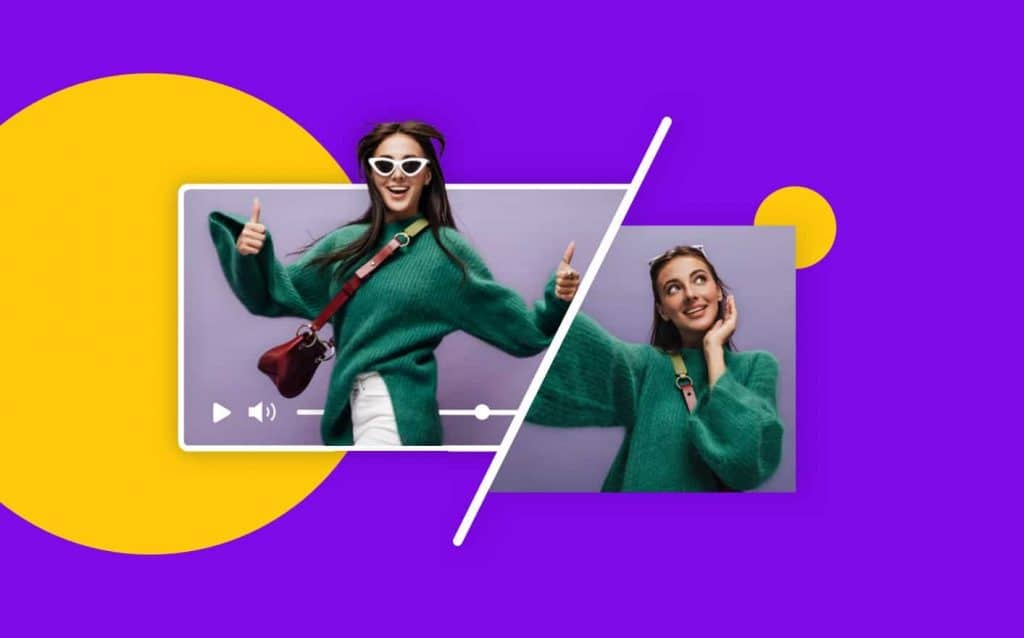
When it comes to social media, the choice between photos and videos can significantly impact your engagement. Let's explore the various platforms that allows us to use these very impactful tools.


History of Instagram, Snapchat and Pinterest


Instagram - this is an online social media platform and social network service for photograph and video sharing. The app was launched in 2010 by cofounders Kevin Systrom and Mike Krieger and it is now owned by Meta Platforms, Inc., the parent company of Facebook. One of the biggest social media platforms in the world, Instagram surpassed two billion monthly active users in 2022.

Originally named Burbn, it allowed users to post check-ins along with photos, which were not yet a staple of social posting.


Snapchat - is a one-to-one and group messaging pp that lets users send photo, video and text messages that disappear after several seconds.

Initially named Picaboo, this version was launched in 2011 by Evan Spiegel and Bobby Murphy. It was only available to the iOS app store. In 2012 Snapchat for Android was launched.

To date, Snapchat has 800 million monthly active users worldwide, including 414 million daily active users. It is labelled the preferred social media platform of Gen Z users.

Pinterest - this platform is an image sharing and social media service which was founded in 2010 by Ben Silberman, Evan Sharp and Paul Sciarra; as a small project that aimed to help people share their hobbies and interests with others online. It enables saving and discovery of information such as recipes, home, style, motivation and inspiration on the internet using images and to some extent animated GIFs and videos in the form of pinboards. The platform grew to become one of the largest social media platforms in the world with over 400 million monthly active users.


Photo vs Video

Using photos on social media

Pros:

  • Ease of creation: photos often feature fewer elements in general.
  • A pool of relevant professionals: photography and photo editing are very popular professional fields and therefore it isn't difficult to secure the help of a third party.
  • Can be consumed rapidly. People can typically scroll through photos quickly and understand their purpose, as opposed to video which requires more of a time commitment.
In general, photos are easier for the social media poster to create and for the audience to absorb.

Cons:
  • Limitations on creativity: photos feature fewer elements than video. As such, there are fewer opportunities to include effects and story elements.
  • Limitations on messaging: on an image, there tends to be fewer areas to include information and fewer options for how that information is included.
  • Because photos are typically easier to produce than video, there are a lot online. This means there is a lot of competition for attention.
The simplicity of using photos for social media is both an advantage and a disadvantage. Many people use the, and therefore it's easy to get lost in the crowd.


Using Video on Social Media

Video content is a great way to provide your audience with a more comprehensive and creative message. However, in some cased, these benefits may be outweighed by the challenges associated with this media form of engagement.

Pros:
  • Opportunities for more thorough messaging: by using video, you have the time to convey complex messages in a more personal and interesting way, as opposed to using just a caption on a photo.
  • Significant creative options and opportunities: video offers more of an opportunity to build a story and more time to deliver details.
  • Potential for extended engagement: a user will tend to spend more time engaging with a video than a photo, due to the nature of the respective forms of media (video has a run time).
  • May stand out more amongst other forms f media because video offers more opportunity for complex and creative messaging.
Videos are ideal when you need to share a large amount of information or want to create a more deeply engaging story for your audience.

Cons:
  • Challenges of production: video production, while often offering a rewarding product, typically requires more skills and resources to navigate.
  • Time constraints: video media tends to take longer to produce than photos.
  • May pose a time barrier to engagement; a user will have to weigh whether they want to spend the time to engage with the video.
Videos are typically take more skill and resources to shoot and edit, compared to photos.


Business Aspect

Almost all image-based social media platforms are great for social commerce. They offer various ways to shop in-app and eliminate the need to drive traffic to an external site. You can sell directly to your customers by building a robust in-app shopping presence. 

Instagram Shopping allows businesses to create a storefront. You can tag specific products in your images and videos and mention products in your profile bio.


Pinterest Shopping allows you to connect your store catalogue and add shoppable links to search results. You'll also get a "Verified Merchant" badge on your profile, which creates a sense of security for customers.


With the Snapchat Store feature, brands with verified Snapchat Business profiles can upload a catalogue and include a "Shop" tab on their profile.

For businesses that cater to a younger demographic, Snapchat is a must. The platform reaches 90% of the 13–24-year-old population and 75% of the 13–34-year-old population in 20+ countries.


Conclusion

Is photo or video better for social media engagement?

Social media engagement is a key element of modern content marketing that both small businesses and larger organizations employ to both build and maintain a client base. An effective approach to social media engagement will depend on unique elements of your business, such as size, resources and target demographics.

From a personal perspective, being an entrepreneur, I only downloaded the Instagram app to promote my business back in 2018 after being encouraged by a few of my customers. I still do not fully understand how to use its business aspect, however, I find that "boosting" posts allows me to reach a wider customer base. 

On another note, I only got the Snapchat app on my mobile about 4 years ago just to use the filters. 😋😁


References

www.britannica.com

www.blog.adobe.com

www.blog.hootsuite.com

www.bing/images

www.hubspotblog.com


We are halfway there! Join me next week as I discuss the X platform formally known as Twitter!


Sunday, 24 March 2024

FACEBOOK


What began as an idea in a Harvard University dorm room amongst friends has become one of the most popular and influential social media platforms of all time! With over two billion users worldwide, Facebook allows users to create an account (for free), post comments, share photographs and post links to news or other interesting content on the web, chat live and watch videos.


History of Facebook

Facebook was launched on February 4th, 2004, and was created by Mark Zuckerberg and four other Harvard College students and roommates. 

Initially the site was only available to Harvard students but was opened up to the world on the 26th of September 2006.

As time went by features such as the famous "like button" and the "timeline" were introduced.

In 2012, Facebook acquired Instagram and went public with shares costing $38 each.


The Facebook Experience

Even the least tech-savvy individual can sign up and begin posting! Facebook makes it simple to post photos, test message, videos, status posts and feelings. The site is entertaining and is a daily stop for millions of users.

Unlike some platforms, Facebook does not allow adult content. Any offensive post can be reported, and users can be banned for their transgressions. This is called "Facebook jail!" Users loose commenting and posting capabilities.

I've been a Facebook user for almost 14 years now and I must admit that I was a bit sceptical to create an account initially but once I realized that I was able to connect with family abroad and find long lost friends, I was sold!

I must admit however, that as time passed, I began using the platform less. With the introduction of other platforms such as Instagram, Snapchat and Tik Tok I've found myself not as interested as I was initially. 

Feel free to share your Facebook experience in the comments! 😄


Key Features

·       Facebook allows you to maintain a friends list and choose privacy settings to tailor who can see content on your profile.

·       Facebook allows you to upload photos and maintain photo albums that can be shared with your friends.

·        Facebook supports interactive online chat and the ability to comment on your friend’s profile pages to keep in touch, share information and just to say “hi.”

·       Facebook supports group pages, fan pages and business pages that let businesses use Facebook as a vehicle for social media marketing.

·       Facebook’s developer network delivers advanced functionality and monetization options.

·       You can stream videos live using Facebook Live!


Facebook vs The Rest

One of the big differences between Facebook and other social media platforms is Facebook’s huge audience, which is almost three times larger than X’s and LinkedIn’s combined. Facebook boasts 2 million monthly active users. Its wide reach allows businesses and users to connect with a diverse audience.

Unlike some social media sites, Facebook offers a variety of features beyond just posting comments and features. Users can:

Browse Local News Feeds

Create Live Videos

Plan and Promote Events

Send Messages

Seek Recommendations

Buy and Sell Items


The Business Aspect

As a small business owner, you may not have the funds to pay for a large-scale marketing strategy as those big companies do. Unpaid social media marketing helps build your business without a dedicated marketing team or big budget.

With 2.9 billion users, your customers are likely on Facebook! No matter what kind of business you may have.

Facebook can help magnify brand awareness, find new customers, nurture customer loyalty, increase website traffic, improve sales and enhance customer service.

With Facebook Marketplace, persons can buy and sell new items within your local community.


Conclusion

As time progresses, we see that social media platforms have evolved to remain relevant and modern. So too, businesses must continue to utilize these digital tools and techniques to help market both their brand and their products.

References

www.livewire.com
www.wikipedia.com
www.bing.com/images
www.investopedia.com
www.buffer.com


Up next...

Photo/Video Based Social Media


LinkedIn

  This will be the final entry of my MKTG 290 blogs! Today, I will be discussing the social media platform known as LinkedIn . Before I cont...